Fullstack Developer & Product Engineer
Anoushka
Shah
Building intelligent systems at the intersection of AI, design, and the human brain.
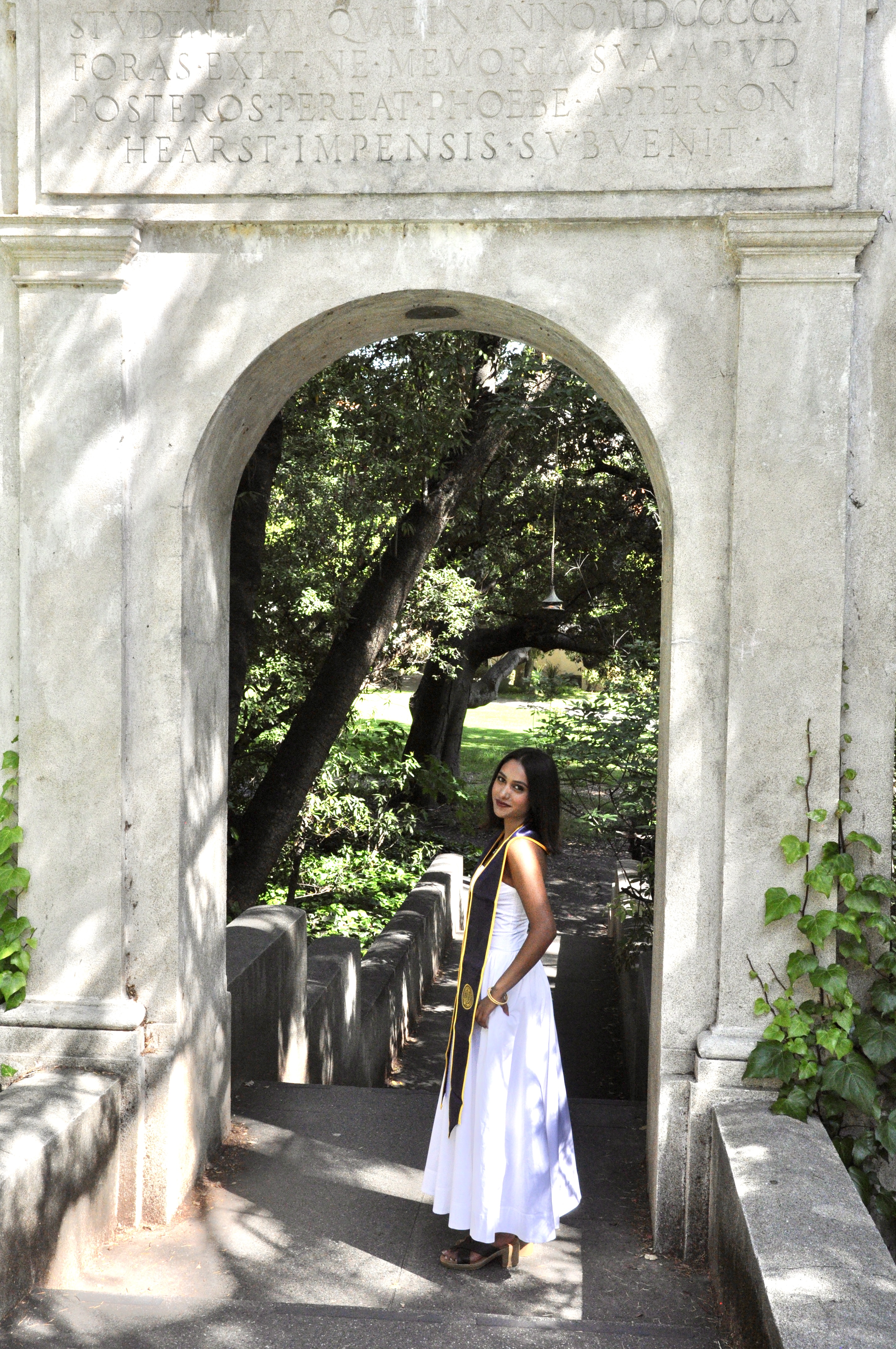
Anoushka Shah works at the intersection of AI, design, and human behavior.
She has shipped production ML systems, led published research in deep learning, and designed products that live at the boundary between technical complexity and human experience. Her work moves across the full life of a product, from model architectures and data pipelines to the interfaces that shape how people come to understand and trust intelligent systems.
A background in cognitive science grounds a core conviction: that how a system communicates uncertainty, earns trust, and sets expectation matters as much as what it can do. A parallel practice in fine arts sharpens the same instinct, that form and composition carry meaning before a single word is read. She believes the next frontier in AI is not just technical capability, but systems that are legible, trustworthy, and shaped by a deep understanding of how people actually think.
AI UI — Microsoft AI
MSN COPILOT DASHBOARD UI PROTOTYPE
A high-fidelity UI prototype redesigning the MSN News experience within Microsoft Copilot, built from concept to deployed product as part of a Microsoft AI pitch to grow engagement with a younger demographic. Design choices include a Copilot-native warm palette, publisher brand typography, a political bias transparency arc, and an interactive world map that turns geography into a navigation tool. The dashboard surfaces personalized topic feeds, live article previews, saved collections filterable by topic, and a full-width Copilot chat bar — every decision made to build reader trust, reward habitual engagement, and position MSN News as a modern transparency-first platform.

Deep Learning — Medical Imaging
BREAST ULTRASOUND LESION SEGMENTATION
Developed a Lightweight 2D UNet for automated breast ultrasound tumor segmentation model with PyTorch. Optimized for efficiency; used group-convolutions to reduce parameter counts while preserving spatial detail. Addressed ultrasound noise and class imbalance using hybrid BCE-Tversky loss; achieved 0.96 accuracy and 0.80 precision with LCC-post processing to suppress false positives

Frontend Web Dev — Personal Project
PERSONAL PORTFOLIO
A fully custom portfolio and art site built from scratch in Next.js 14 and TypeScript, designed to reflect a dual identity across technical and creative work. Features a bespoke editorial design system built entirely in CSS, with a four-font typographic hierarchy using Cormorant, Domine, Forum, and Manrope, a strict grid layout with hairline rules, and a warm ink-on-paper palette. Engineered with a single-source content architecture where all data flows from one config file, a dynamic lightbox gallery for the art section, full mobile responsiveness, and clean component separation across a dual-tab routing system.


Full Stack Web App — Personal Project
WAVELENGTH
An AI-powered music curation app that generates personalized Spotify playlists in real time based on user context, operating as a context-aware DJ that understands sonic character and emotional arc. Built six playlist generation modes spanning mood, workout, breathing sessions, focus, activity, and continuation from recently played tracks. Playlist generation streams NDJSON line-by-line over a ReadableStream so playback begins while the model is still generating — the queue is a module-level singleton with deduplication and auto-refetch below 10 tracks. Integrates Spotify Web API and Web Playback SDK via PKCE OAuth, Strava API v3 for workout data, and WebGL GLSL shaders for visual feedback.

AI & ML
Software Engineering
Misc. (Design & Research)
MICROSOFT AI
AI Product Engineer (Contract)
Leading 0-to-1 development of a personalized article intelligence system for MSN — highlights salient buzzwords and dynamically links semantically related recent news. Architecting LLM parsing, vectorized knowledge graph, and personalized retrieval workflows using Azure, LangGraph, FastAPI, Neo4j, and Chroma. Designing interface, interactions, and system architecture in Figma and Adobe Creative Cloud.
GOOGLE DEEPMIND
AI UX Engineer (Contract)
Agentic AI product design and Gemini alignment-system logic for the AIUX Research Team. Designed a user trust and model autonomy alignment system using RLHF, pitched to senior management. Implemented UI prototype for an agentic calendar extension with autonomy adjustment using Google API, Gemini LLM, LangChain, React, Node.js, and PostgreSQL. Led the design of a Bayesian model for a global user trust-in-automation score and calibration algorithm evaluated against distributional variance and user reliance variables. Designed decision flows, information flows, user journey, and system architecture in Figma and Adobe Creative Cloud.
AWEAR
ML Infrastructure Intern
Wearable device startup backed by Techstars. Performed cost, latency, and failure analysis of a real-time EEG signal processing pipeline with GCP and Cloud Run. Designed and implemented a feature extraction pipeline for classification of attention states from streamed EEG data with Python, BigQuery, Dataform, Vertex AI, and GCP. Conducted statistical analysis and hypothesis testing for identifying biomarkers of attention states through power spectral density. Led A/B testing sessions of prototypes for assessing hardware product design.
UCSF RADIOLOGY & BIOMEDICAL IMAGING
Research Fellow, Center of Intelligent Imaging
Selected for CI²AI Fellowship at the Neuromodulation Imaging Lab, mentored by Dr. Melanie Morrison, PhD. Created a deep-learning neuroimaging tool for efficient visualization of 3D electrode lead trajectory in postoperative DBS patients with movement disorders. Led end-to-end development of a slicewise 2D UNet model with 3D reconstruction for binary segmentation of leads from CT scans using PyTorch, Nibabel, and FSL. Shadowed intraoperative-MRI procedures and created dataset using ITK Snap to label electrode masks for NIfTI volumes. Presented at UCSF Mission Bay's Summer Symposium; published in ISMRM.
Visit lab websiteNEUROTECH@BERKELEY
Research Engineer, Neural Signals
iEEG signal processing — implemented linear encoding and MLP decoding for understanding the neural basis of music cognition. Building on results from UC Berkeley's Knight Lab (Bellier et al., 2023) by replicating the study with a vocal-instrumental data split and identifying differential patterns in active brain regions.
NEUROTECH@BERKELEY
Marketing & Design Lead
Growth, social media management, and graphic design for the largest student community of engineers and researchers in AI and BCI development. Organized the first neurotechnology student hackathon in partnership with NVIDIA AI and OpenBCI.
LET'S
COLLABORATE.
Open to fullstack engineering and product-facing roles. I love early-stage products and teams that care about craft.